Brussels, 04 June 2026
Heritage Adapts! launches today as the first global campaign bringing together the heritage sector to support climate adaptation. The campaign aims to help at least 3,000 heritage sites and practices take locally led climate action by 2030.
Led by Preserving Legacies and supported by global strategic partners, the campaign gives local heritage stewards practical guidance, access to data, and opportunities to connect with peers.
Recognised by the UN’s climate agency as a Plan to Accelerate Solutions advancing the Global Goal on Adaptation, Heritage Adapts! connects local action to global impact, strengthening community resilience worldwide. ICLEI Europe participates in the campaign via the European Heritage Hub, a two-year pilot project co-funded by the European Union, to set up a permanent and independent heritage hub in Europe.
A crisis threatening heritage, and community resilience
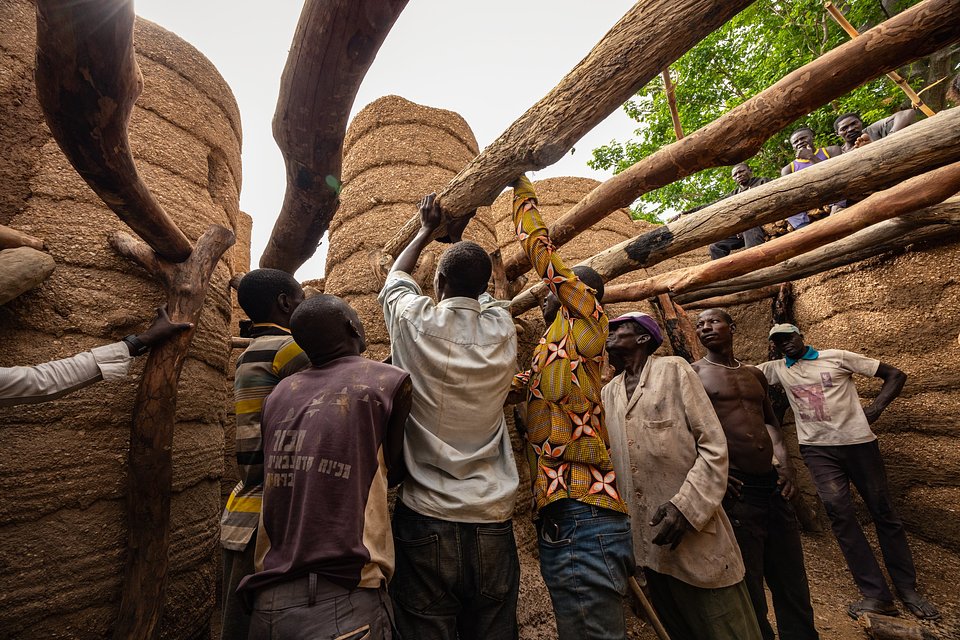
Community building a takienta at Koutammakou, Land of the Batammariba in Togo and Benin - Credits: Preserving Legacies | Michael O. Snyder
Climate change is the fastest-growing threat to heritage globally. A newly published UNESCO report found that across all UNESCO-designated sites, climate-related hazards have increased 40% in a decade, and more than one in four could hit irreversible tipping points by 2050.
However, UNESCO's data covers only a small share of the world's heritage. Most sites, living practices, collections, and landscapes that communities value are not included in international monitoring frameworks, leaving their exposure to climate risks largely unmeasured. This gap is part of the problem. At the same time, heritage adaptation remains largely overlooked in climate finance and policy, leaving many local stewards with limited funding and support.
A collective campaign built for action
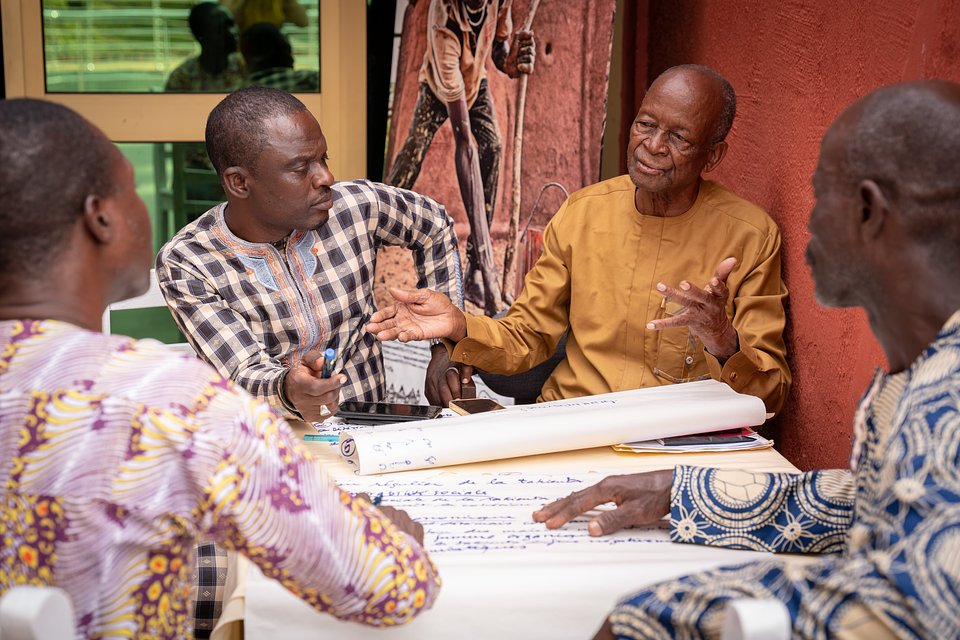
Community discussion during locally led climate risk assessment workshop for Koutammakou, Land of the Batammariba in Togo and Benin- Credits: Preserving Legacies | Elizabeth Carpio
Heritage Adapts!—led by a coalition of 11 heritage, culture, and climate organisations from all over the world and supported by over 100 partner organisations (full list here)—sees the heritage sector not just as a victim, but as a big part of the solution, able to provide communities with valuable knowledge, proven practices, and sources of resilience that can help societies adapt to a changing climate.
Cristina Garzillo, Head of ICLEI Europe’s Socio-Cultural Transformations team, remarked:
“The HeritageAdapts! campaign marks a significant step forward in advancing the cultural heritage target of the Global Goal on Adaptation Framework by mobilising heritage sites and cultural practices to implement locally led adaptive strategies by 2030. It also strongly reinforces the work already being carried out by ICLEI through the European Heritage Hub project, particularly in promoting culture-based climate action, enhancing local resilience capacities, and strengthening place-based responses to climate impacts”.
The campaign is grounded in hands-on expertise and an inclusive, locally led knowledge system approach. At its core is the collective pledge to take locally led adaptation action by 2030 supported by an online community of action platform.
Participants gain access to a self-paced roadmap that guides them through every stage of adaptation making climate adaptation accessible and actionable. A global peer network also connects practitioners on the frontlines, enabling them to share experiences and learn from one another. Additionally, downscaled climate data is made available in downloadable regional packets, complemented by training so stewards can integrate it with their own needs and community knowledge for solutions that are targeted, sustainable, and locally appropriate.
In 2026, under the European Heritage Hub, ICLEI Europe is bringing climate solutions rooted in cultural heritage to the fore by organising two Intergenerational Climate Conversations together with European Heritage Label sites: Ostia Antica (Italy) and Sagres Promontory (Portugal). These two sites have taken the Heritage Adapts! pledge and are committed to deepening local adaptation action to preserve their cultural heritage.
Heritage stewards, organisations, and institutions across the world are invited to take the pledge and join the community of action at act.heritageadapts.org.
About Heritage Adapts!:
Heritage Adapts! is a global campaign mobilising heritage sites and cultural practices behind a collective pledge to implement locally led adaptive strategies by 2030. Recognised as a UNFCCC Plan to Accelerate Solutions advancing the cultural heritage target of the Global Goal on Adaptation, it provides stewards worldwide with the guidance, connections, and data they need to take meaningful climate action. Led by a cross-sector coalition spearheaded by Preserving Legacies, Heritage Adapts! is accelerating adaptation to strengthen community resilience worldwide. Partners include:
About Preserving Legacies:
Preserving Legacies is a global initiative advancing locally led adaptation to safeguard heritage places and practices from the impacts of climate change, strengthening community resilience. Supported by the National Geographic Society, it equips custodians with the training, tools, and networks to implement targeted, sustainable, and locally appropriate solutions. Its proven three-stage cohort model supports nearly 100 custodians representing a wide range of heritage, from UNESCO World Heritage Sites like Petra to Indigenous seed-saving practices in New Mexico. With the launch of the Heritage Adapts! “community of action” platform, Preserving Legacies is scaling its impact to support thousands of stewards worldwide, protecting our past to save our future.
About the European Heritage Hub:
The European Heritage Hub, launched in May 2023 is led by Europa Nostra and co-funded by the European Union, to set up a permanent and autonomous heritage hub in Europe. The project, now in its Preparatory Action phase, counts 28 consortium partners and brings together a large array of heritage stakeholders and initiatives, responding to the need for a more structured cooperation and coordination at all levels of governance, from local to European and international.
About ICLEI - Local Governments for Sustainability:
ICLEI – Local Governments for Sustainability is a global network of more than 2,500 local and regional governments committed to sustainable urban development. Active in 125 countries, we influence sustainability policy and drive local action for low emission, nature-based, equitable, resilient and circular development. ICLEI Europe provides members in Europe, the Middle East and West Asia with a voice on European and international stages, a platform to connect with peers, and tools to drive positive environmental, economic and social change. ICLEI Europe works closely with an extended network of local and regional governments and partners on a broad range of topics.